
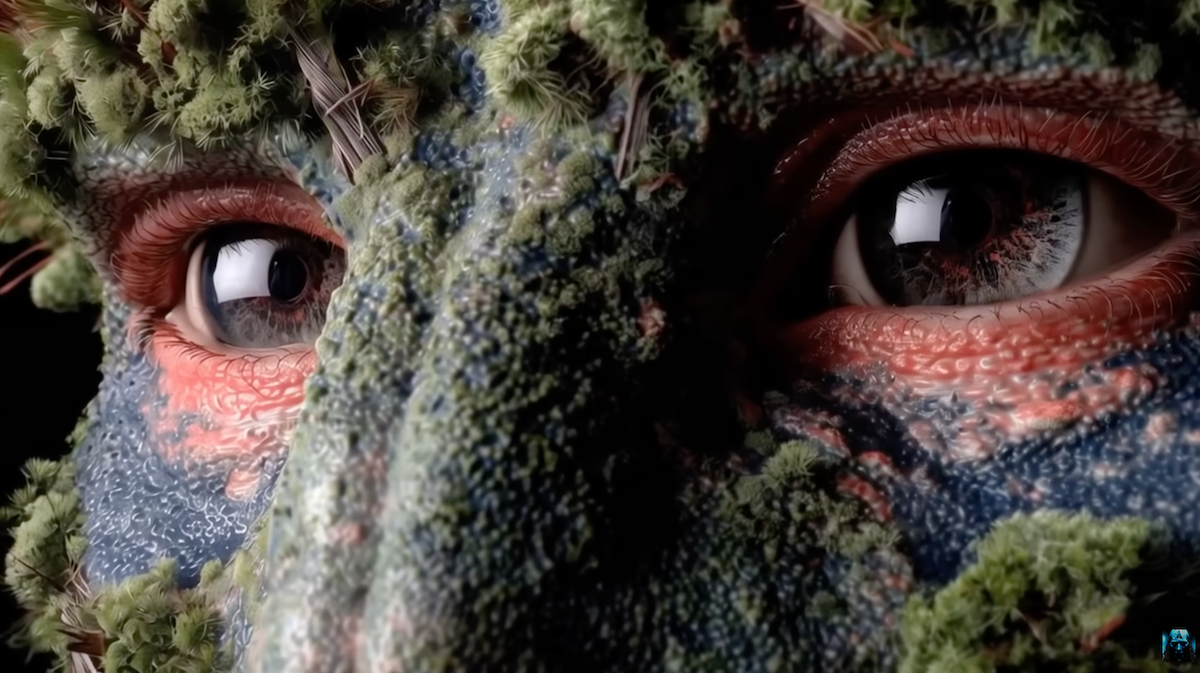
Because AI applications are so simple to use, they have democratized the creation of music videos. More importantly, it is who is making these videos; that is, the artist themselves.
The music industry has been undergoing some major changes over the last few years. So much so they no longer rely on the music video to introduce them to new artists. This was a devastating blow to artists struggling just to get heard. Forget radio air time. Radio is also no longer available to new artists. The music labels have tossed the new artists out with the garbage. Unfortunate for these big corporations, they have missed one of the most significant changes in music and the music videos.
The individual, that is the struggling musician, refused to be tossed aside. These artists have embraced AI as a way to create their own music videos and to get the kind of attention they want without the plodding record labels.
Back in January of 2026 I wrote an article about AI and how music video artists were under fire for their art (The War Against AI). That war is still going on but the haters don’t get the press they are used to getting. The reason is those that produce music videos and use AI tools are still producing some of the best music videos we can find anywhere.
For the better part of the last two years we have been highlighting and reporting on the use of AI for the development of the music video. Here is an MS NOW video about consolidation that gives a brief history of MTV and how it changed the industry. The history is looking to change once again.
There seems to be no end to the amount of hate toward artificial intelligence tools. Fear is a great motivator and has led directly to the renaissance. People don't change, but new technology expands how they can express themselves. Putting it plainly, modern technology has allowed more people to create art; art they were always capable of creating but lacked the tools or the access. Again, AI tools have helped artists express themselves as few others have ever done before.
This article will explore the lives and music videos of four such artists: Zenith Apex from Bretagne, France; Cole Younger from Amarillo, Texas; Robert Mann from North Carolina, and Jason Popow from Alberta, Canada. During our exploration of their lives and works we found some common background, especially when inspiration comes into play.
What began as a simple article to highlight four Barclay Award winners and their work, became a philosophical investigation about inspiration and imagination. Once I spoke with each artist I discovered similarities in their backgrounds. Each of these artists has different motivations. However, as different as they are from each other, they each were guided in a similar directions to create some remarkable music videos. Each proving our original concept, that, “Imagination is more important than knowledge.”
What many critics of AI overlook is the artistic vision behind the work. This is the heart of what makes this artistic evolution more of a renaissance. With more people gaining access to the tools that were once controlled by the recording industry there is no limit to the level of creative and original music video we have been seeing.
This article will focus on four artists, their artistic inspiration, and the use of these tools to make music videos in ways that no other tools have before.
Historically speaking, there is a period of adjustment. This is where we as a culture are now — adjusting to these changes so that people can get used to how these applications work. And, if necessary, adjusting their professions accordingly. For example, I watched a studio engineer as he discussed Suno™. Once he realized it could replace him and his recording studio he decided he would learn the app better than anyone. This is what professionals do.
This article will highlight four artists that TikiKiti has been working with over the last year. These artists all use AI applications to various degrees. Despite their different backgrounds, these artists share one defining characteristic, they make music that is personal and introspective. Their music can be autobiographical, and at times, a confessional. These four artists are at the forefront of helping the music video industry reinvent itself. In the process they give us reason to take notice and realize it all begins with artistic vision.
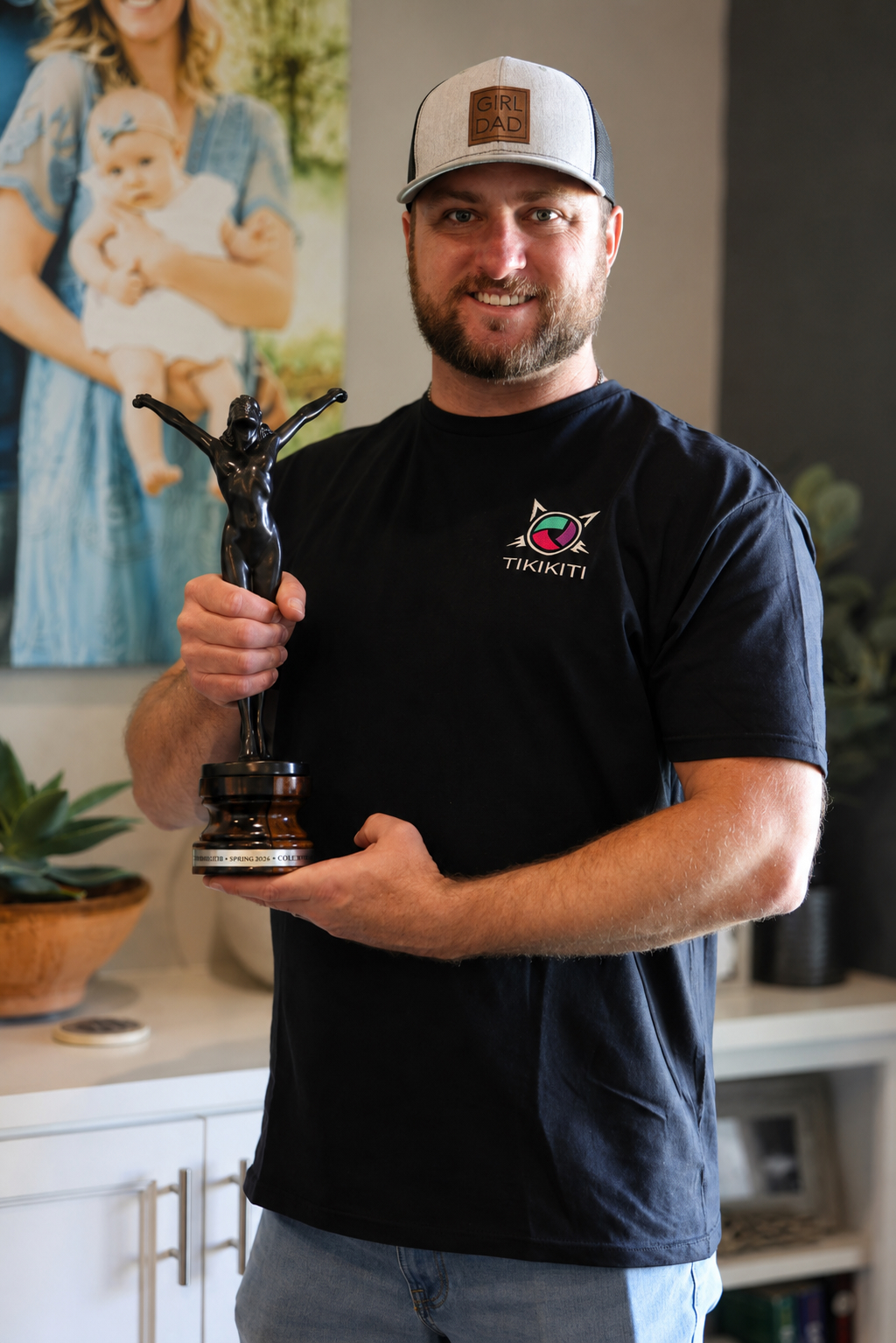
Cole Younger Brakebill is a hard working man. The thing is, what he works so hard at is being is an artist. Not only does he write and produce his own music, he makes his own videos; both AI art and live action. That means he is always shooting and editing.
He has developed documentaries about living in Amarillo, Texas, and he has documented the remodeling of military aircraft. As well as rebuilding trucks. There seems to be no limit to what Cole works on.
As with the other artists featured in this article Cole experienced a type of spiritual awakening when he fought against, and won his battle with addiction. As he says in his blog, ““I learned after addiction that I’m wired differently,” he says. “I need something to push uphill every day.” His reference here is to the ancient Greek myth of Sisyphus. (A myth that is persistent with the artists highlighted here. In each case they each needed to have this battle so they could grow as individuals and as artists.) He continues by says, “Where alcohol and drugs once filled that role, creativity does now. “This is my addiction now — in a healthy way.””
Cole has help define the role of AI art in the creation of his music and his art better than most. He says, “What AI art music is not good for is replacing taste, lived experience, emotional truth, or artistic judgment. It can accelerate output. It cannot tell you what matters. It cannot decide which song actually says something real. It cannot supply identity to a person who has nothing to say…. The tool is not the art. The volume is not the meaning. The software is not the voice. The human being still has to bring the story, the filter, the restraint, the standards, and the final decision.” What he has discovered is that it all starts with an artistic vision.
It is this very clear and articulate opinion that has helped to make Cole an outstanding artist. He has something to say and found that music — that is Suno — helped him to articulate what he wanted to say. This also helped him find a way to show others what he has to say. And with a catalog of 250 songs and AI art has helped him say it with style.
We have been following Cole for some time. One turning point came when he wrote “Disappear.” The animation he created for this song says so much about how he views his art; and through his art, the kind of man he is. It was this video that convinced us at TikiKiti to award him the Barclay Award.
Many of his videos have his main character driving down the road with city lights off in the distance. Entire university classes have been taught about this. Driving toward something such as a city in the distance is a metaphor for the journey. We do not see the character reach his destination because his life is not over. We see this in the song “Disappear” where it is a predominant scene. When coupled with his lyrics you understand his song is about the journey and less the destination. Mostly though his music, Cole asks very personal questions about the kind of man he is — or the kind of man who is singing this song, “Not gone, but gone from here — step out of the picture — leave the noise behind my ears…. Sometimes the only way to save yourself is disappear.”
What Cole has done differently than other artists is incorporate his AI art animations into his hobby — if you can call his work on trucks he renovates a hobby. It seems more of his passion. We watch him rebuild a Chevy box truck. His passion goes so far as to wonder why Chevrolet discontinued such an original truck design. In this most recent video, “Flatlander” he explains all this renovation from the beginning.
As with the other artists we are highlighting here, Cole and his music is very personal and introspective. He seems to have also gone through a time of spiritual awakening that gave him the direction he needed to bring all his artwork together to help him build his life today.
When he started using AI art to help him create his music he developed a very strong understanding on how it worked and how best to use it. He says, “The real work was still human. I had to decide what was worth keeping.
“Even when AI art gave me a strong starting point, I still had to rewrite weak lines, fix syllables, change phrasing, adjust section order, and tighten the structure until it matched what I actually wanted. AI art could get me close…. The same was true once the music started generating. I still had to judge tone, pacing, emotional weight, vocal feel, and overall impact. I had to reject the versions that sounded competent but empty. I had to recognize when one finally connected.”
During this process is where Cole was coming to understand how AI art worked best, he hit upon a fundamental approach, not just AI art music but the same for writing music in general, and that is, “Most people misunderstand AI art music because they focus on whether the tool can generate good output. It can’t. The harder question is whether the person using it has the taste, patience, and emotional clarity to know which output is actually right…. At a certain point, many generations sound good. My job was to hear the one that felt true.”
The above quotes from Cole can be found on his website here: https://www.rooseveltroadvideo.com/blog-1-1/how-to-use-AI art-to-create-and-release-a-meaningful-music-catalog-my-265-song-blueprint-in-9-months. Here is of how and why he started with AI art music production.
When considering his thoughts on AI art and the place it has in his life we suggest further reading of his website, The Man Behind The Machine, Cole Younger and the Quiet Rise of AI art Country Music. It is here you will find the thoughts he shares with the artists we are highlighting in this article.
It is this similarity between his approach that the other artists here that convinced us he is on the forefront with using this technology. And that we can expect to see more original music videos coming from his mind. And that is all part of the current renaissance we are seeing.
Cole Younger & Roosevelt Road Productions links
Cole Brakebill on Instagram
Cole Younger Music on Instagram
Cole Brakebill on Facebook
Roosevelt Road Productions on YouTube
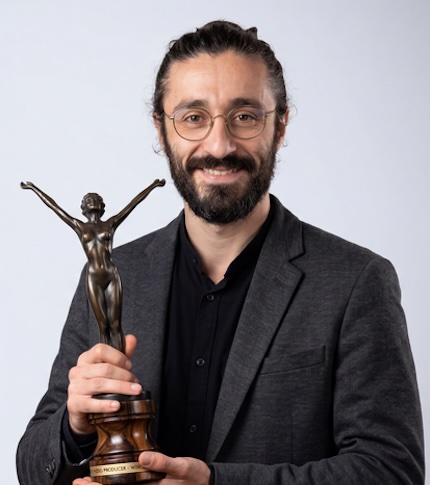
From Bretagne, France, we have Zenith Apex. He has created a mystery about himself and his work. He uses his works as a way to heal himself and the world around him. When you listen to his music you hear this concern. Here is one of his recent videos. From his concept album Cybermind, here is The Awakening and the track “Eternal Code”: When we first started to work on this article I realized that all of these artists have one thing in common: their work is very spiritual. Not religious or spiritual in a mysterious “woo woo” sense, but spiritually in the sense that their work embraces an all-embracing sense of humanity. They have used AI art and the music video as a vehicle to explore their philosophy.
Zenith Apex is the most upfront of the artists we met. By using abstract imagery he has been exploring the nature of “self” and how he fits into this universe he has discovered. His music and lyrics explores the nature of consciousness and how we can see these in the world around us.
When we interviewed Zenith for this article he went into detail about how he has managed to afford the various programs. He has working arrangements with companies such as Pixverse®, Kling, Hailuo (AI video), Luma AI (AI video), and SunoAI for his music.
In this interview he talks about the issues he faces every day in production of this media.
He began by us telling us about his near death experience and what a transformative experience that was (most definitely). He says, “When I had my transformative mystical experience, it was sort of ego death, or NDE (near death experience), what words people wanna put on it I don't care, some will believe, some others won’t. But it was a true authentic version of myself. It was buried [very deep], wAI artting to be remembered. Then it opened [and] I cried a lot, tears of joy, my body felt full of light it was amazing. It happened at a time [when] I felt I like nowhere to go, damaged relationship, it was very chaotic. Then it called, it opened, and I [saw] entirely different views of the world. I believe from this experience I got back with what in a spiritual age we call downloads, I brought them back with me and today here we are. I feel I found my life goal and Earthly mission.” (Right: from ‘Echoes Of The Vanished King’ “When the King Left No Body”)
He continues recounting this experience, “I am not the only one to [have] had similar experiences but when it happened I had no clues, no ideas, no information about it. Answers came months later when I started to research what [happened].
“Because my surrounding took me for a fool, that I needed a psychiatrist, my ex-girlfriend [and] my sister took me to psychiatric emergency. Then the diagnostic happened, the psychiatrist saw clearly [what happened] and I felt he understood me. I was just conscious and aware. It was kind of altered state of consciousness at its peak.”
Zenith continues by analyzing this life-changing event, “Since then I closed the gates to everyone and just did my things, creating daily without leaving, just committing till it would work.” (Video below: from ‘Dub Nation’ track: “Stopped Bracing”)
To better explain this experience he pointed me to this video from Essentia Foundation. At the 4:50 minute mark he Zenith says his experience mirrored the speakers. He continues by saying, “Because opening yourself is making you vulnerable, and that's how feelings can be created. At least from heart place. Some people have same effects with psychedelics or DMT or whatever, I never took once in my life, or at least no that I'm aware of…. When I spoke about it to people I used to know that do consume this they didn't comprehend how I could have triggered this
state without using psychedelics. Perhaps they can't comprehend that we are all built differently. Or they can't accept that it is reachable without using psychedelics or another type of drugs. Since that day, I have not consumed any cannabis or alcohol.” (Video at right: From the album ‘Still Here’ track “Archive of Breath”)
Putting this experience into a form that can be understood today is where his artwork has guided him. “It was also the beginning for me to get more into spirituality and esoteric knowledges. I ever been fascinated by science, technology, astrology, I remember watching stars when I was a child talking to them. Then years passed and it totally got lost in the mind. It was no longer a part of me, then it came back a little bit before the experience.
“I think AI art is one the biggest realization I had. I ever been creative in any domains, but was often pushed back because of myself letting others decide for me.
“…AI art it made it all possible, accessible — from the very beginning.”
(Video at right: From the album ‘After the Last Take’ track “I Kept Going”) When I asked Zenith about the language on some of his music he, sAI artd he created the language using AI art. He elaborated, “I invented it with the assistance of AI. If I recall it's something played with the vowels. The language is Aura Lingua Primorium. [It] doesn’t exist—purely invented.”
Zenith explains how we all are part of a similar consciousness. He and I spoke of the Myth of Sisyphus — about the challenge of pushing a boulder up a high only to have it roll down again. He thought about this then he has used Greek mythology as part of his earlier works when he started with AI art. He says, “I think in general life is a constant challenge and it is up to us to pick the ones we wanna to take. Like there is a mAI artn quest and it's up to us to prepare for it the way we want, we can do side quests to prepares to the main quest or choosing to go straight to the main quest.”
“Not everyone is meant to build or create something but this is what I think my life path is about. However I do believe all humans are meant to connect. This our essence.”
Album: ‘Dub Between Sleep and Spirit’: track 3: “Herb Smoke Through Di Speaker”
Zenith Apex links:
Apple Music
Spotify
X/Twitter
TikTok
Gmail
Pixverse AI art Video
SunoAI art MusicKling AI art - AI art Video
Runway AI art - AI art Video
HailuoMinimaxRefferal-AI art Video
YouTube

Robert Mann is a storyteller. In the classic sense he tells stories that may be considered parables because they tend to reflect life’s meanings.
In his recent music videos he has taken this technique to new levels. By creating a series of recurring characters he has brought his stories to life. AI art art art has allowed him to illustrate these stories and bring his artistic vision to life. He uses to AI art to bring his artistic vision to life.
His music usually has an electric guitar as a central instrument. This is no surprise when you think that he played guitar in a band for years. Music and songwriting has always been his passion, and AI art has allowed him to build his other creative work upon that passion.Robert uses these tools to express his philosophy of life. Robert does not use AI tools to write his lyrics. “I am speaking and use these tools to communicate what I want to say, not what a computer thinks.”
All of his animations and music can be found on his YouTube channel. Using a variation on his last name he created Everymann Productions. The title of this production company was not just a simple choice because of his name, but a conscious recognition of how his philosophy is so important to his music and his animations. As he says on his YouTube channel:
Everymann Productions is dedicated to crafting and arranging lyrics that inspire us to open our hearts and follow our own innate divine guidance. Utilizing the latest AI art tools, we create captivating music, soulful vocals, and engaging music videos. We warmly invite our viewers and listeners to freely share the information and entertainment we provide.
Central to his philosophy and fundamental to his animations is the character he calls Sparky. He says, “Sparky is the spark of Divine Love resident in each heart. He represents that still small voice of inner guidance that we typically ignore and notice with 20-20 hindsight…. Sparky represents “Living Intelligence” within a system of nonhuman intelligence.” Robert says we have more than just five senses. This universal understanding is critical to his music and his music videos.
What Robert has done here is to throw out all the arguments that condemn AI art as an output from a disconnected machine, and connected all our thoughts to a greater source. AI art output cannot even exist if it were not for the human who is creating the direction it needs. It is this connection that makes the animations we see from him and others unique to him.
A superb example of his philosophy along with his music and animation is the video he titles “Mourning Dove.” Here he presents a very real world, his garden where he shows how the birds in his garden bring life to his music as well as bringing the viewer into his world.
(Robert and I had a FaceTime call and he walked me through his garden. It is all very real.) If you are wondering if he uses any AI art animation here, he says he did. Trying to find it proves fruitless because you end up missing the beauty of the entire work by trying to focus on something that doesn’t really exist.
Recently, Robert has taken to reimagining stories that have been around for some time; for example, Plato’s The Cave. This story tells how people only see what is right in front of them, rarely looking behind the scenes for a more complete understanding. Here he shows the story precisely as it is written but adds his recurring characters to illustrate how it now reflects our modern world with the inclusion of AI art.
It is his music that brings the story and its meaning into a clear view. The music helps us see life outside the cave and what it means to us all — everyday.
To understand how Robert’s spirituality fits into his world today and has become part of his daily existence, look no further than one of his most recent animations. In “Feet” we see a comparison with how modern religion has played a part in our worldly life. We also see a vision of the future. In all cases, the meaning of his stories always comes back how we all love. The story of feet is about a journey. As we read in the lyrics:
You just walk in your sleep
Making nightmares of dreams
You’ll get up off your knees
When Love finds its feet
You just walk in your sleep
Making nightmares of dreams
You’ll get up off your knees
When Love finds its feet.
Everymann & Robert Mann links:
Apple Music
Spotify
Everymann Productions on YouTube

Jason Popow began his Waste of Time Productions with a simple premise. This production company, “… Waste Of Time Productions is dedicated to creating entertainning videos that capture life’s adventures, memorable road trips, and everyday experiences from our unique perspective.
We carefully piece together honest, unfiltered moments that we hope bring you joy, laughter, and a welcome escape from the ordinary. While our content is made purely for entertainment, we’re grateful for the support that allows us to keep creating….”
As fun as this sounds, what emerged was a collection of remarkably profound music videos. From Alberta, Canada, Jason’s videos have always struck us as unique in ways we couldn’t always put our fingers on. He has his feet, or at least all 18 wheels of his Peterbilt 289, firmly planted on the ground.
One thing we are sure of…, his videos are about the land he is driving through, not what he is driving. He is a long-haul professional truck driver who has driven to all but four states. (Yes, we know you can’t drive to Hawaii so we’re not including that.) Jason loves the United States and is not shy of showing it. This pride is a fundamental part of who he is. There is the pride in the work he does, both driving and music and video production.
He has three albums of original music he has produced. One is called ‘Trucker Troubadour.’ This is the best way to describe what he does. As with the troubadours of the middle ages, Jason travels around the country writing about the places he has been to. His videos have always been about the places he drives through and the people he met along the way. For Jason it was never about what he was driving but what was out his windshield. He made fan music videos and always found the right type of song to reflect what he thought and what was being shown in his videos.
Than everything changed. He discovered Suno and started writing and producing his own music.
Unlike the other artists that are highlighted here, Jason has mostly avoided the AI art animation music video. Well—not entirely. He did give it a try but could never get used to how the animations looked. Still, there are times he uses some animations from time to time. An example is his song and video to “Another Bridge To Burn.” At the very end we see a crow flying and resting on top of a cross. This entire video shows his life on the road with all its dangers and contradictions. We see how absolutely dangerous this life is when he shows a car pulling in front of him and running off the road — we don’t see what happens after that but we don’t really need to. Our imagination takes care of all the damage.
There’s rarely a video that does not show a big truck that has been wrecked or a crash between a truck and a car. Most people have little idea how very dangerous this life is until you see it through the eyes of someone like Jason.
NOTE: I remember I was dropping off a package at the United Parcel Service (UPS) shipping center. Upon leaving I notice a sign on the fence of the driveway saying, “You are now entering the most dangerous place in the country. The United States Highway System.” This is what we see and hear in Jason’s videos.
It is in his music that we really become familiar with who Jason is. His lyrics are deeply personal and reflect all parts of his life. Sometimes they seem like a confession. “Another Bridge to Burn” is not just a song about driving. It’s a song about the life of a man who is always wondering about the road he is on.
“The spirits in the wind have been whispering secrets,
Telling me to let go of the ghosts I've been keeping
And all the lies that I've been told.”
‘The memories keep on echoing
Like a melody in my mind
Reminding me of what I've lost
And the love that's left behind.”
“Life's a winding road, with twists and turns
We can't always control, where it leads us
But we can choose, how we ride the wave
But remember the bridges we cross, could lead us to our grave.”
“And the dust settles, the echoes remain
A reminder of the bridges we chose to burn or save.
Another recurring theme in most trucker videos is that of “the outlaw.” Usually this means how these drivers will skip logging their hours or mileage or how they outsmarted the police. Jason takes on another type of journey with his song and video “Outlaw.” Truly a song that sounds like a confession:
“Every road I traveled
Lead me farther from home
Every sin I could commit
Every lie I told
Every law I could break
I broke 'em all
No use in savin' my soul
Outlaw
Damn that man
He forced my hand
I wasn’t bluffing’
you made your stand
Everything you had, now lays in the sand”
Here is a man haunted by the ghosts of his past. Someone who has taken chances and has lived to tell his stories. In “Outlaw” he shows us who he is by lighting his cigarette with a blow torch — his hair is not tied back and we wait to see if it catches fire. (Spoiler: It doesn’t.)
Mostly his music is about his life as a trucker. In “Holiday Road” he tells us about how his life prevents him from any kind of “normal family life.” It is almost impossible to listen to this song and not start to cry. He knows what it’s like to miss those special days and watching a family grow up.
Note: Speaking to another trucker he told me that there isn’t a trucker who hasn’t had to pull over and cry. He said they’re lying if they deny it.
“I'm that ghost on the highway, invisible and alone
Watching other’s love and laugh, through a stone cracked window.
Holidays come and go, it’s just another day on the road
For a man like me, there's no place to call home
People getting frustrated, and the traffic’s jammed tight
Everyone rushing all around, not a care, in their frantic holiday night
But little do they know, I'm the one who's dying
Driving through the night, while they're stuck in their family life
The weight of exhaustion bears down on me
A constant companion, a reminder of the toll this life takes on me
I grip the steering wheel, feeling the wear and tear
A symbol of my freedom, but also my prison, and my tears.”
Jason show us a life we have only wondered about. Passing the big trucks on the highway we tend to ignore them. They seem so distant. Most people do not understand how their lives are affected by people like Jason. Here is how he feels at the end of each day”
‘The headlights fade, another holiday is done
I sit alone in the dark cab, driving through the night, just another soul
forgotten on this holiday night.
I've lost count of the days, the weeks, the years
But in this solitude, I've found my peace, it’s the same every year.”
Jason, as do many other long-haul drivers, find reasons to keep doing what they do. It is a sense of adventure. We hear and see this adventure in much of his music and videos. In “Backroads & Hidden Gems” he tells us of these reasons — it’s always the people as he says in the opening verse of this song:
“I love the open road.
It's just me, my wheels, and the backroads.
America, wild and free.
I wander through small towns, where time stands still
Folks tip their hats, sayin’ "How's your day, friend?"
They’re genuine and pure, with no ulterior motive,
just friendly and sincere.”
But even in this song we manage to get choked up, and it is because of lyrics such as this:
“In these hidden places, I find my peace of mind
Where the world may be crazy, but the people are my kind
They'll lend a hand, and offer you a smile
That's the America, that stays with me, a while.”
Jason tells me he has been writing poetry since he was 10 years old. In his music this experience shows. He has one song he calls “Trucker Troubadour.” This title illustrates his life very accurately. In the middle ages of Europe a troubadour was a musician who would go from one place to another writing music about the people and places he saw. This is Jason’s life set in modern America.
With some of his recent music videos we see his music in what seems so much more personal. Solo Horizon brings Jason, his poetry, his lyrics and his music videos to a new level. It comes as little surprise when we found out that a screenplay of Jason’s very interesting life is being produced. An update of the folk hero saga? This does seem like something Jason would agree to. The movie in the style from the 70’s would never do him justice.
So many modern day long-haul professional drivers do not fit this cliché of the trucker. As with Jason they are used to the long hours of being alone in their truck cab. For Jason, this is his creative time.
Waste of Time Productions & Jason Popow Links:
Apple Music:
Spotify
YouTube
What I have to come to appreciate after writing this is that music doesn't work unless it makes the listener feel something. Anything! Doe is make you laugh or cry. Are you angry, sad, happy, or remembering something. The more people who are making music the more I realize that so many of these artists understand this fundamental part of how music works — and how it connects to the soul of the listener.
Good music means the listener is taking part in the song. The music doesn't just wash over them. It picks them up and takes them with the current.
